
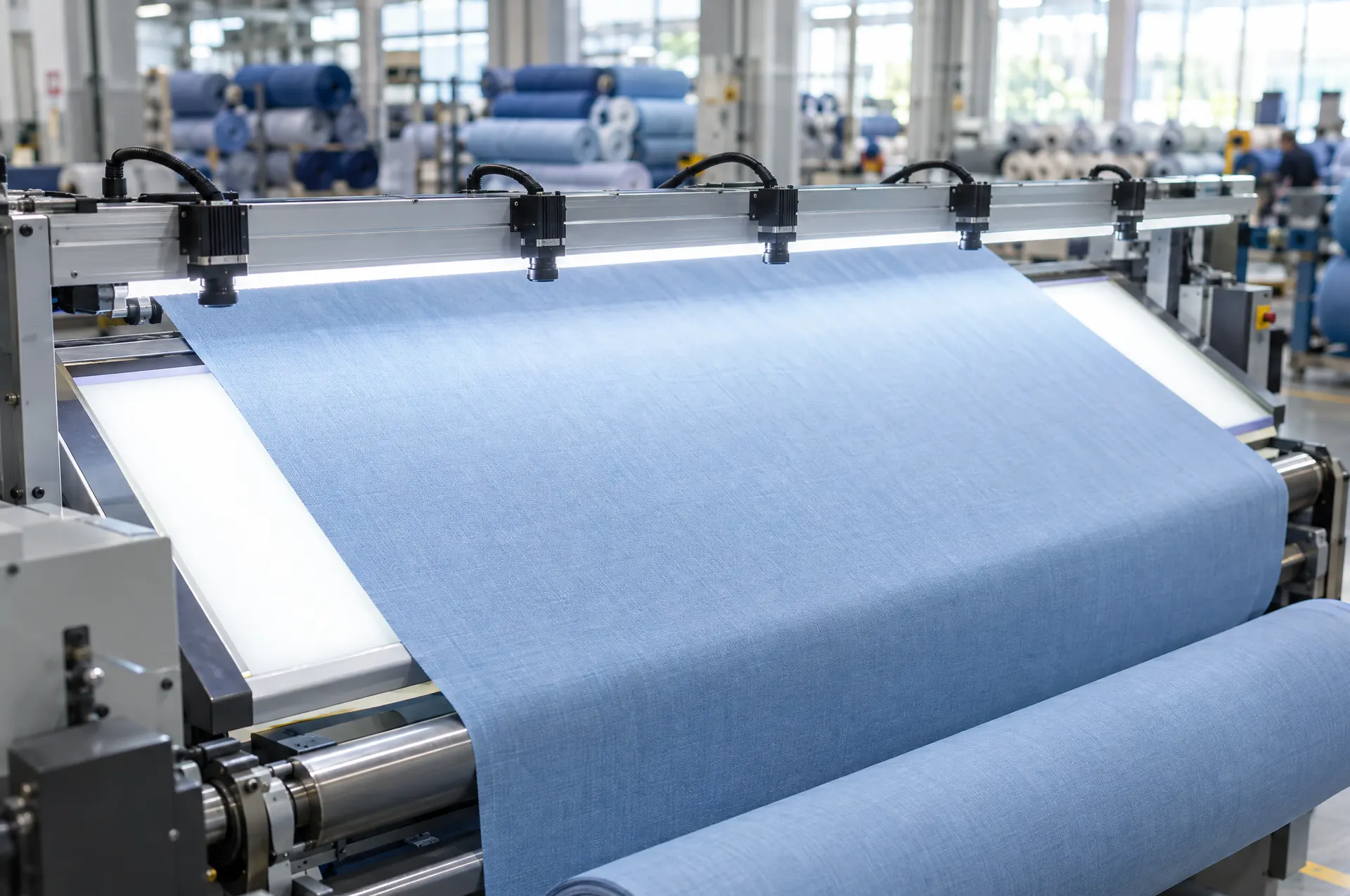
Automatic Fabric Inspection System: AI-Based Fabric Defect Detection
Systems that scan fabric across its full width, record defects by metre position and automate grading.
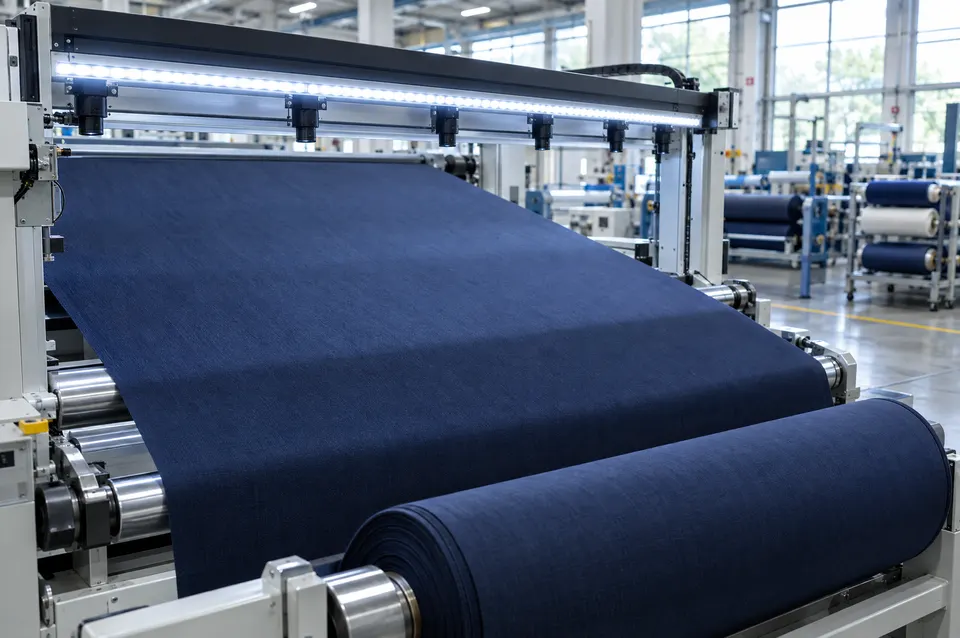
An automatic fabric inspection system scans the fabric moving through a fabric inspection machine across its full width with line scan cameras. An AI model detects defects, and each defect is recorded with its type, size and metre position. From these records, 4-point grading and a defect report per roll are produced automatically.
The system can be installed by adding cameras, lighting and an encoder to an existing fabric inspection machine. For patterned and coloured fabrics, the model is trained on images of good fabric and does not treat the normal pattern repeat as a defect.
What does it check?
- Weft and warp defects
- Pulled yarns, broken yarns and knots
- Holes and tears
- Stains and oil marks
- Colour and shade differences
- Pattern defects and shifts
System components
- Line scan cameras
- LED line light across the fabric width, backlight where needed
- Encoder tracking fabric speed
- Vision computer and AI model
- Operator screen and defect marking
- Per-roll report and 4-point calculation
How does it work?
- Step 01
Scanning
As the fabric moves, line scan cameras scan the full width without gaps; the encoder matches the image to fabric speed.
- Step 02
Defect detection
The AI model finds defects in the image and classifies them by type.
- Step 03
Position and size
The metre and cross-width position and the size of every defect are recorded.
- Step 04
Alert
The operator is alerted on screen; if required, the machine stops or the defect location is marked.
- Step 05
Grading and report
When the roll is finished, points are calculated with the 4-point system and a report with a defect map is produced.
Industries
Related solutions
Frequently asked questions
Can it be installed on an existing fabric inspection machine?
Yes. Cameras, lighting and an encoder are added to the existing machine. Before installation, the machine width, speed and fabric path are reviewed.
Which fabric types can it be used on?
It can be used on woven and knitted, greige and finished fabrics. A separate product profile is created for each patterned, coloured or textured fabric type.
What is the smallest defect it can catch?
The smallest detectable defect depends on camera resolution, fabric width and machine speed. These values are set from samples of your fabric.
Can 4-point grading be calculated automatically?
Yes. Because the size and position of each defect are recorded, points are calculated automatically with the 4-point system based on ASTM D5430. The acceptance limit is set to the buyer’s criteria.

Let’s evaluate your project together
Tell us about your product and inspection needs, and we will work out the right system together.