
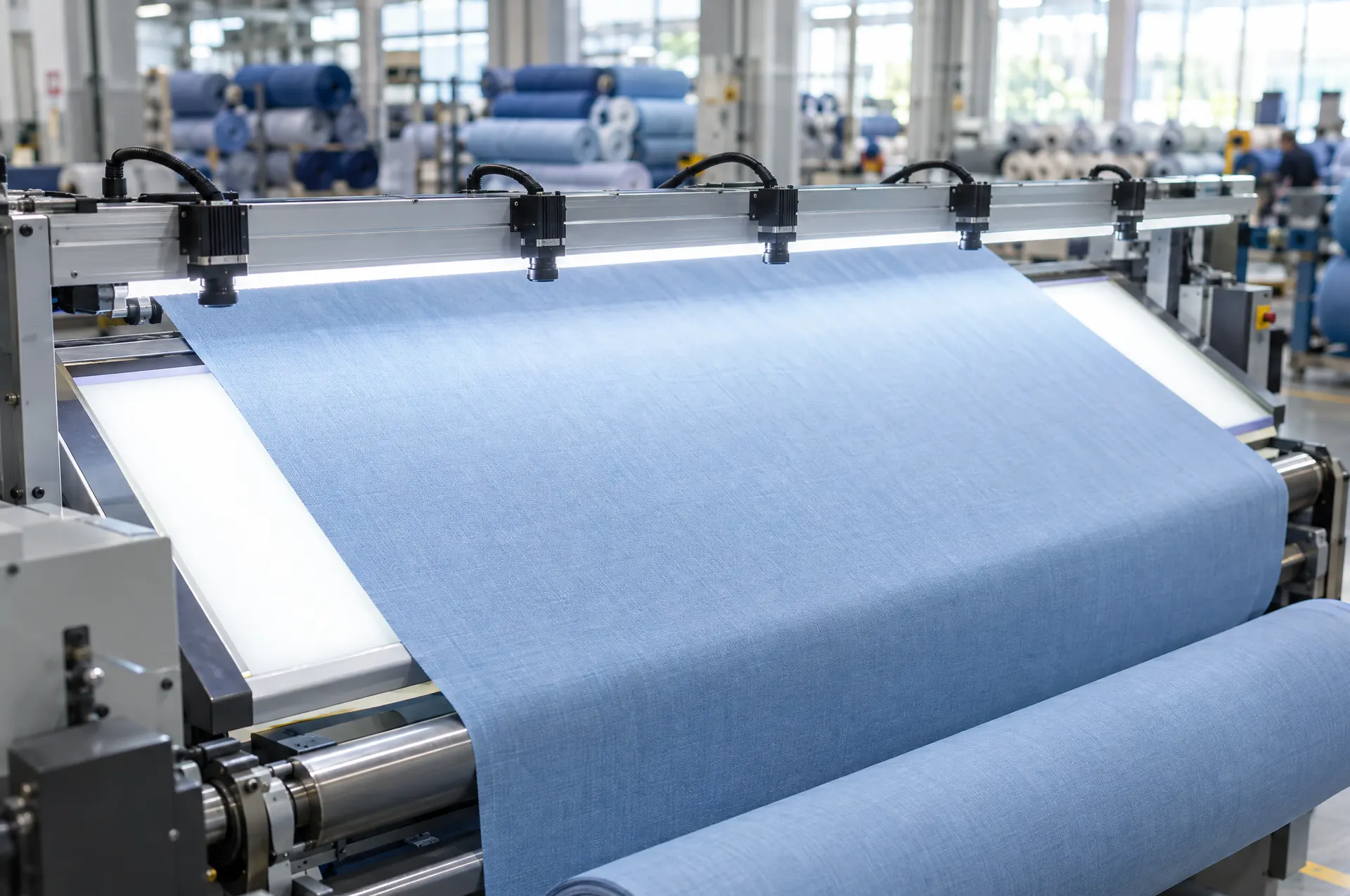
The most widely used method in fabric inspection is the 4-point system. Each defect is given 1 to 4 points according to its size, the total is calculated against the inspected area, and the result is compared with the buyer’s acceptance limit. Traditionally the inspection is done by eye on a fabric inspection machine. Camera and AI-based systems scan the fabric across its full width, record defects with their metre position and automate the grading.
How is the 4-point system applied?
The 4-point system is based on ASTM D5430. Points are given by defect length as follows:
| Defect length | Points |
|---|---|
| Up to 3 inches (about 7.5 cm) | 1 |
| Over 3 and up to 6 inches (7.5 to 15 cm) | 2 |
| Over 6 and up to 9 inches (15 to 23 cm) | 3 |
| Over 9 inches (23 cm) | 4 |
Holes and openings of 1 inch (about 2.5 cm) or less get 2 points, larger ones 4 points. No more than 4 points are given for one linear yard; even if there are several defects in the same yard, the points do not exceed 4.
How are the points calculated?
The standard expresses the result as points per 100 square yards: total points × 3600 / (yards inspected × fabric width in inches). Plants working in metric units do the same calculation per 100 square metres:
Points per 100 m² = (total points × 100) / (inspected length (m) × fabric width (m))
The acceptance limit depends on the buyer and the fabric type and is agreed with the buyer at the order stage.
Limits of manual inspection
- The operator’s attention varies over a shift; small and low-contrast defects can be missed.
- The same defect can be graded differently by different operators.
- Defect positions and points are usually written on paper forms, which makes later review difficult.
- Inspection speed is limited by the operator.
Automated fabric inspection with cameras and AI
In an automated system, the fabric is scanned across its full width with line scan cameras. An AI model detects defects such as pulled yarns, weft and warp defects, holes, stains, oil marks and shade differences. Every defect is recorded with its type, size and metre position.
With these records:
- grading by the 4-point system is done automatically,
- a defect map and report are produced for every roll,
- areas where defects repeat are fed back to production.
For patterned and coloured fabrics, the pattern is taught to the model with images of good fabric, so its normal repeat is not treated as a defect. A separate product profile is created for each fabric type.
Where is automated inspection installed?
- greige fabric inspection after weaving or knitting,
- finished fabric inspection after dyeing and finishing,
- final inspection before shipment.
It can also be installed by adding cameras and lighting to an existing fabric inspection machine.
Conclusion
The 4-point system is the common language for measuring fabric quality. Camera and AI-based inspection does not change that language; it finds defects with the same criteria on every metre, automates the grading and keeps a record for every roll.
You can read about the components and steps of the system on the automatic fabric inspection system page, and our approach for textiles on the textile industry page. Contact us if you would like to assess whether automated inspection suits your fabric type.