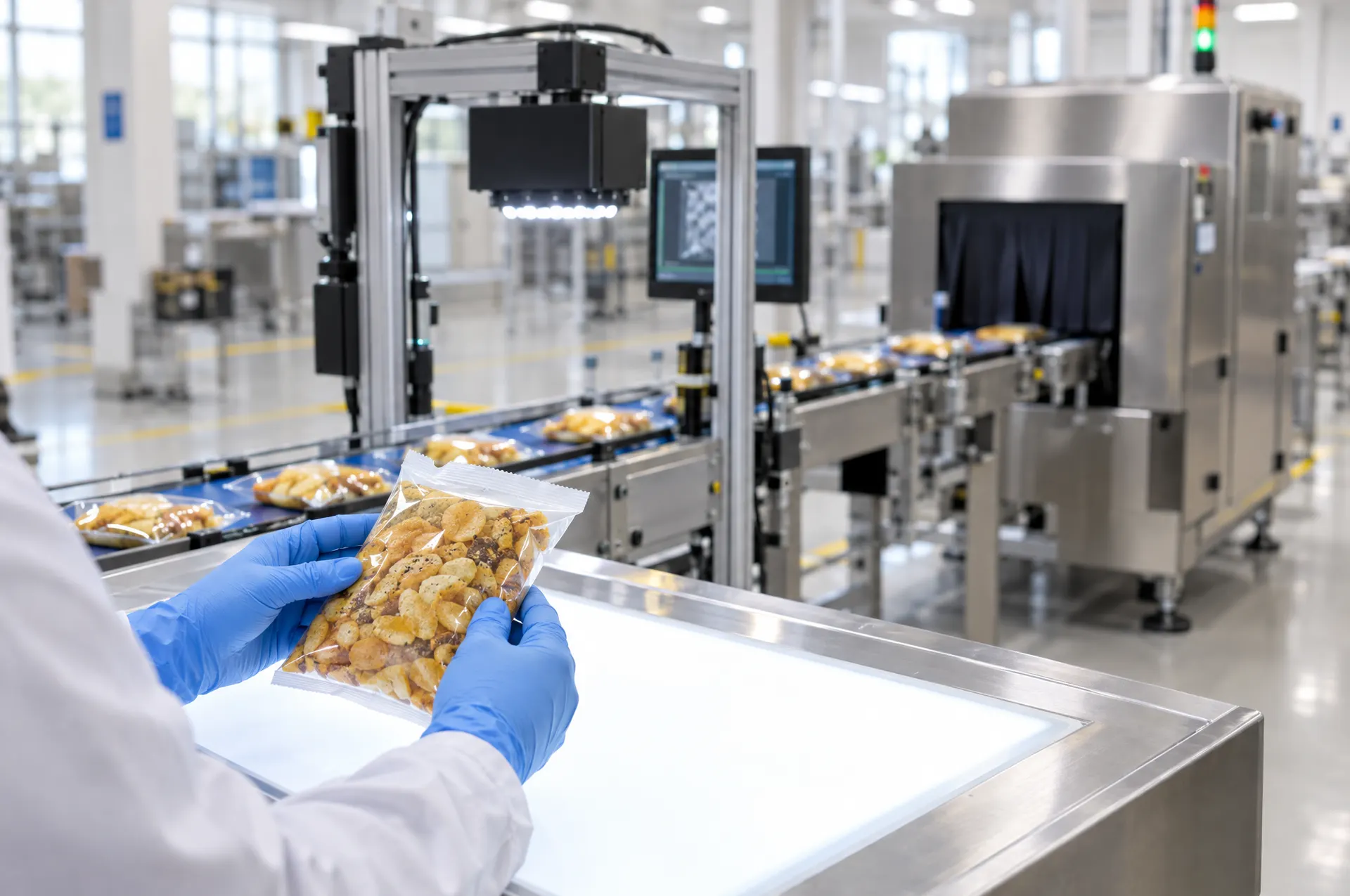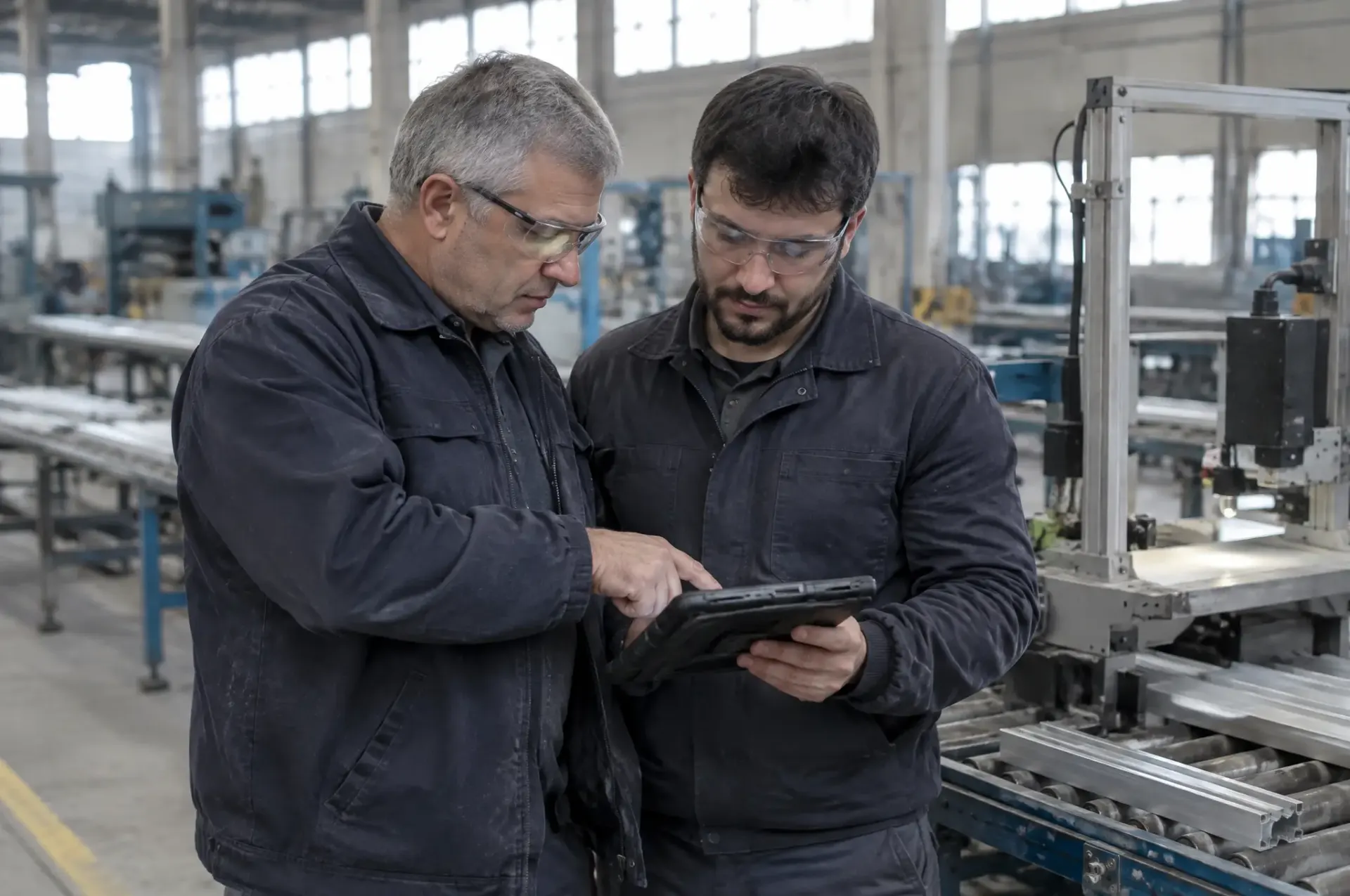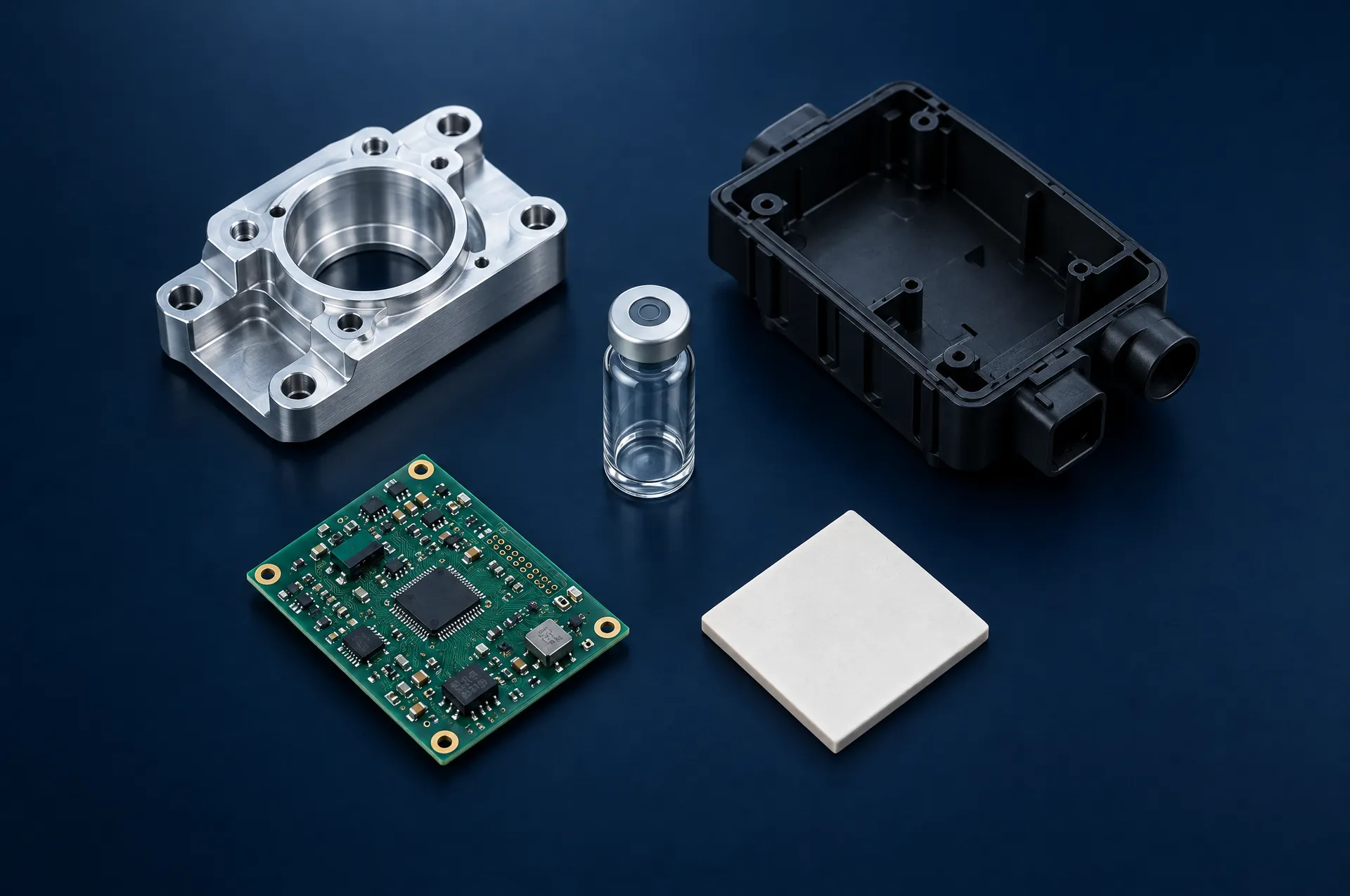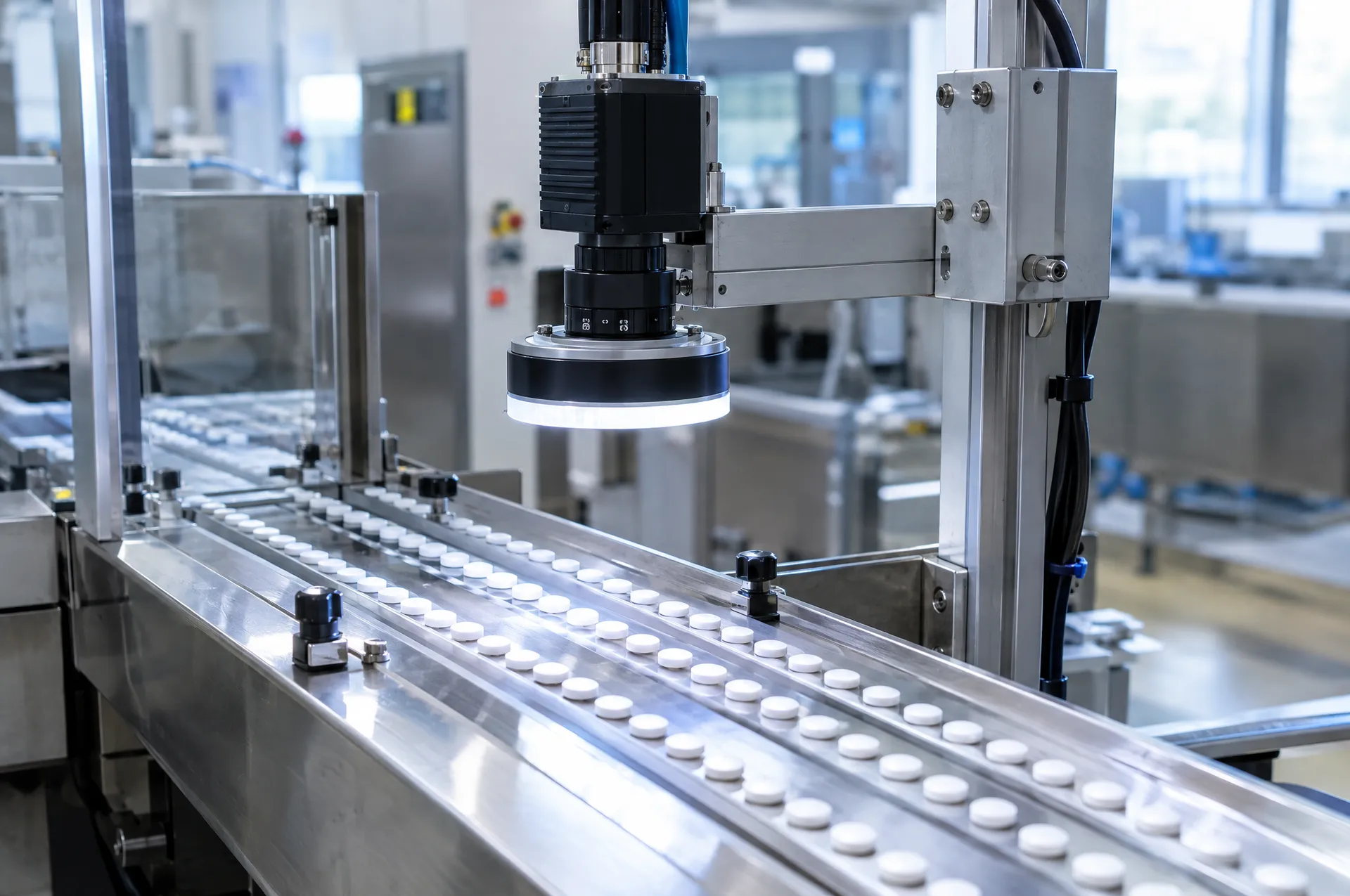
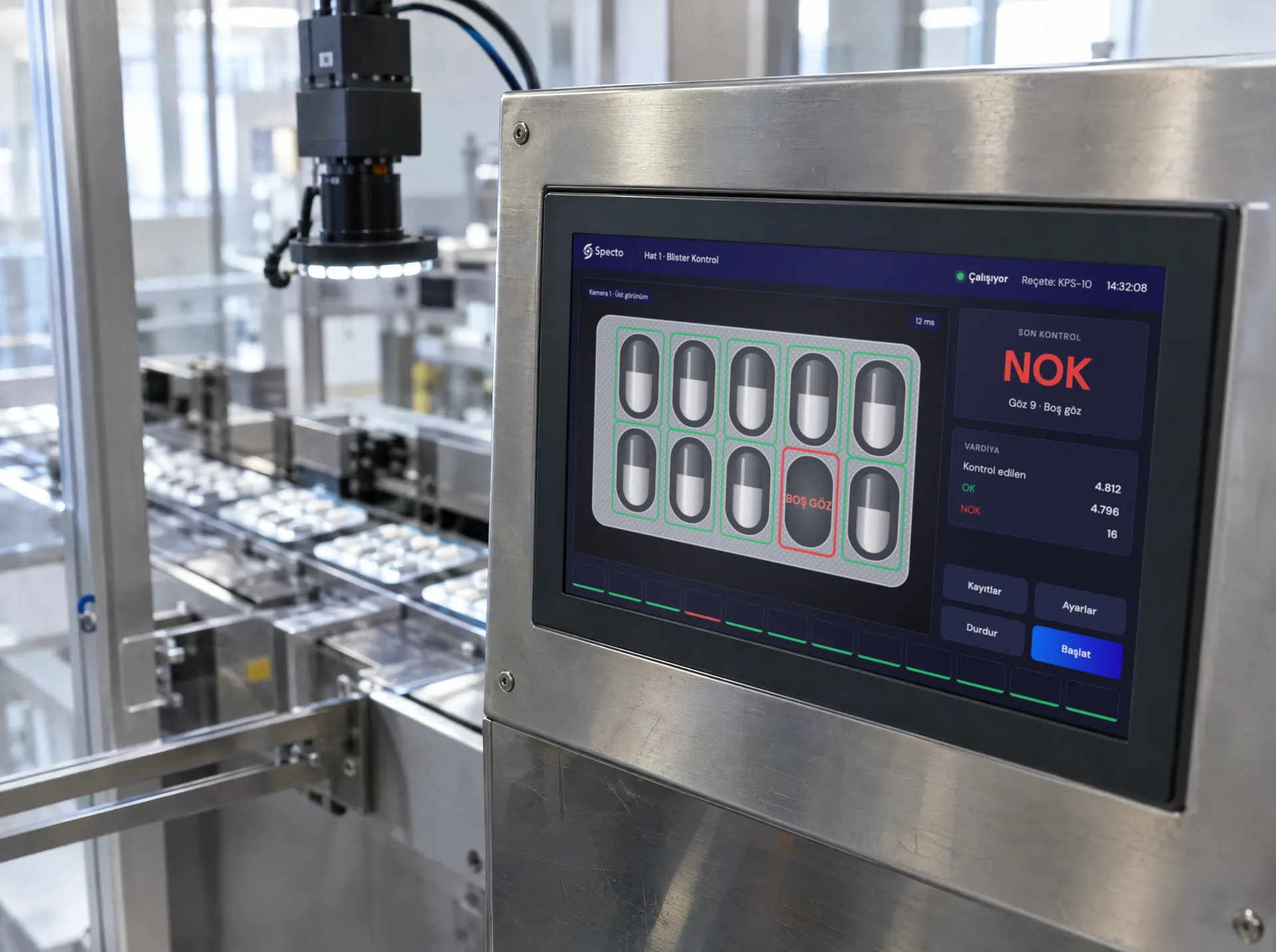
A camera-based quality control system takes an image of every product passing along the line, evaluates the image in software and classifies the product as good or defective. Defective products are rejected automatically and every result is recorded.
How does it work, step by step?
- Trigger: When the product reaches the inspection point, a sensor or PLC signal triggers the camera.
- Image capture: The camera captures an image under lighting chosen for the product. Lighting is what makes the defect visible, so it is the most critical part.
- Evaluation: The software compares the image with the reference of a good product. Rule-based measurements and AI models can be used together.
- Decision and rejection: The result is sent to the PLC or rejector and the defective product is removed from the line.
- Record: The image, result and reject reason are stored for each part.
What is it made of?
- Industrial camera and lens
- Lighting suited to the product and defect
- Industrial computer that processes the images
- Machine vision and AI software
- Connection to the PLC, sensors and reject mechanism
- Operator screen and record keeping
If suitable cameras or lighting are already installed, the system can be built around that equipment.
What drives the cost?
The cost of a camera-based quality control system depends on the product and the line. Rather than a fixed price, it is determined by the following factors:
- Defect size: Sub-millimetre defects require higher-resolution cameras, special lenses and more controlled lighting.
- Line speed: The more products per minute, the higher the demands on the camera, the computer and the reject timing.
- Number of views: Is only one side inspected, or the full circumference, top and bottom? Every extra view means an extra camera.
- Product variety: Inspecting many products of different sizes and colours instead of one widens the software and recipe management scope.
- Existing equipment: If the cameras, lighting and PLC on site can be used, hardware cost goes down.
- Mechanics and integration: Camera mounts, protective enclosures, rejectors and data exchange with production systems are added as needed.
How is the price finalised?
A reliable quote starts with reviewing product samples or photos taken on the line. We test how the defect appears to the camera, then a site visit fixes the camera position and reject point. After these two steps, the hardware list and installation scope are clear.
If you would like a preliminary assessment for your product, you can reach us with product images through the contact form.